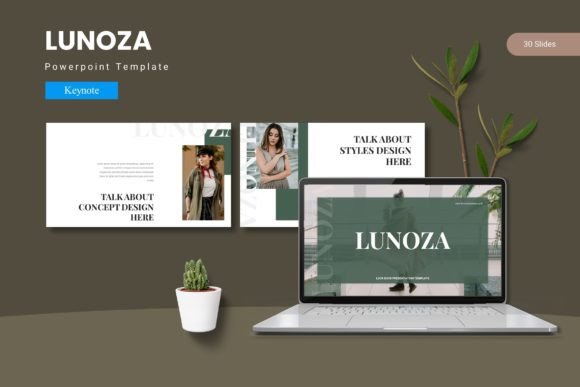
Lunoza Keynote Template: A Visual Framework for Impactful Presentations
Ever sat through a presentation where the slides were so cluttered, inconsistent, or dull that the message got completely lost? You're not alone. We've all been there, struggling to follow along as the speaker clicks through slides that look like they were thrown together in five minutes. That's exactly the problem the Lunoza - Keynote Template was designed to solve. It's not just a collection of pretty slides—it's a structured visual system that helps you communicate ideas clearly, professionally, and with real visual impact.
Whether you're pitching a new business idea to investors, presenting quarterly results to your team, or teaching a workshop at a creative conference, the way your slides look matters just as much as what they say. People process visual information faster than text, and a well-designed slide deck can be the difference between an audience that's engaged and one that's checking their phones. That's where having a thoughtfully crafted template like Lunoza becomes a genuine asset in your toolkit.
What Makes This Template Stand Out From Generic Slide Decks
Most free or low-cost Keynote templates give you a handful of slides with minimal customization options. You end up spending hours tweaking layouts, fighting with alignment, and trying to make colors work together. Lunoza takes a fundamentally different approach. With over 150 total slides spread across five premade color schemes, you get 30 unique slides per template variation. That's enough variety to build presentations for completely different contexts—from a corporate boardroom to a creative portfolio review—without ever feeling repetitive.
The design language strikes a balance between modern minimalism and visual richness. You'll find pixel-perfect illustrations, handcrafted infographics, and clean layouts that give your content room to breathe. There's no visual noise competing for attention. Instead, every element serves a purpose. The section break slides create natural pauses in your narrative, helping audiences absorb information before moving to the next topic. It's a small detail, but it makes a noticeable difference in how well people retain what you're presenting.
What really sets this apart from other design assets is the level of editability built into every slide. All graphics are fully resizable and editable. Images can be swapped out using simple drag-and-drop placeholders. Fonts, colors, and layouts can all be customized through master slides, which means one change at the top level cascades through your entire deck. If you've ever had to manually update the header color on 30 individual slides, you already understand how much time this saves.
Real-World Applications Across Industries
Let's talk about where Lunoza actually gets used, because the applications go far beyond the typical corporate presentation. Small business owners use it to create investor pitch decks that look polished enough to compete with funded startups. Freelance designers build client-facing proposals and portfolio showcases that demonstrate their capabilities without needing to design every slide from scratch. Marketing teams put together campaign presentations, product launch decks, and social media strategy overviews that stakeholders actually enjoy sitting through.
For content creators and bloggers, this template opens up possibilities you might not have considered. Think about turning a blog post into a visual slide deck for SlideShare or LinkedIn. Or creating a downloadable PDF guide that looks professionally designed. The gallery and portfolio slides are particularly useful here—they let you showcase work, products, or visual content in a format that feels curated and intentional rather than haphazard.
Educators and workshop facilitators find the structured layout invaluable for teaching materials. Instead of cramming bullet points onto blank slides, you can use the infographic templates to visualize data, processes, and frameworks in ways that actually help people learn. The five color variations mean you can match your slides to your institution's branding or create distinct visual themes for different courses or modules.
Building Visual Consistency Across Your Brand
One of the most overlooked aspects of professional presentations is visual consistency. When your slides jump between different font styles, color palettes, and layout approaches, it creates a subconscious feeling of disorganization. Your audience might not be able to articulate what feels off, but they'll sense it. Lunoza's master slide architecture is specifically designed to prevent this problem. Set your brand colors once, choose your typography once, and those decisions flow through every single slide automatically.
This consistency extends beyond just looking good—it directly supports brand recognition. When your presentations use the same visual language as your website, social media graphics, and marketing materials, you reinforce your brand identity with every interaction. People start to associate that specific visual style with your business. Over time, this builds familiarity and trust, which are foundational to any successful brand.
The included color schemes aren't random either. Each of the five variations has been carefully developed to work across different contexts and moods. Whether your brand identity leans toward bold and energetic or calm and professional, there's a starting point that aligns with your aesthetic. And since everything is editable, you're never locked into the default palette. Adjust hues, swap accent colors, or introduce your exact brand hex codes—the template adapts without breaking its structural integrity.
Practical Tips for Getting the Most Out of Your Template
Having a great template is only half the equation. How you use it determines whether your presentation lands with impact or falls flat. Here are some observations from working with presentation design that apply directly to using something like Lunoza effectively.
Start with your content, not the slides. Before you open Keynote, outline what you want to say. Know your key messages, your supporting points, and the flow of your narrative. Then choose the slides that best serve each section. The template gives you options—use the ones that fit your story rather than forcing your content into slides that don't quite work.
Don't use every slide. Having 150+ slides available doesn't mean you should use them all. A focused 20-slide presentation will always outperform a meandering 50-slide one. Select the layouts that strengthen your specific message and leave the rest unused. Quality over quantity applies to slide decks just as much as it does to typography and design.
Pay attention to typography choices. Even though the template comes with suggested font pairings, take time to consider whether those typefaces align with your brand personality. A modern sans serif font communicates efficiency and forward-thinking, while a serif font can convey tradition and authority. If your brand already has established typography guidelines, swap the template fonts for your own. The master slide system makes this straightforward.
Use the infographics intentionally. The handcrafted infographics are one of Lunoza's strongest features, but they need to represent real data or real processes. Don't drop in a chart just because it looks nice. Every visual element should earn its place on the slide by making information easier to understand or more memorable. A well-designed infographic that illustrates actual numbers will always be more compelling than a decorative graphic with placeholder data.
Test your presentation on the actual display. What looks perfect on your laptop screen might read differently on a projector or a large monitor. Check text sizes for readability at distance. Make sure color contrast is strong enough to read in various lighting conditions. The template's clean layouts generally handle this well, but it's worth verifying before you present.
Why Structured Design Assets Save You More Than Time
There's a temptation to view templates as shortcuts—ways to skip the design process and get something that looks decent without much effort. But the real value of a well-built template like Lunoza goes deeper than time savings. It provides a design framework that elevates your thinking about visual communication. When you work within a structured system, you start making more intentional choices about hierarchy, spacing, and visual flow. Those skills transfer to everything else you create, from social media graphics to marketing materials to website layouts.
For entrepreneurs and small business owners who can't yet justify hiring a dedicated designer for every presentation, having access to premium design assets like this levels the playing field. Your pitch deck can look just as polished as one created by a funded startup with an in-house design team. That visual credibility matters, especially when you're making first impressions with potential clients, partners, or investors.
The file structure itself reflects thoughtful organization. The main download includes five keynote files—one for each color variation—along with a readme document that covers font information and photo credits. Everything you need to get started is clearly labeled and logically arranged. No hunting through nested folders trying to figure out which file is which. It's the kind of attention to detail that makes the entire experience feel professional from the moment you open the download.
Ultimately, presentations are about communication. The Lunoza - Keynote Template gives you a visual foundation that supports clear, engaging communication without requiring design expertise. You bring the ideas and the expertise. The template ensures those ideas are presented in a way that captures attention, maintains interest, and leaves a lasting impression. And in a world where everyone is competing for attention, that visual edge can make all the difference.