Streamline Your EV App Design with This UI Kit
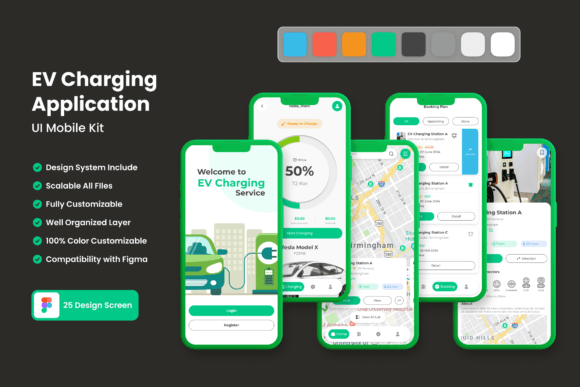
Building a mobile application from scratch, especially one as specific as an electric vehicle charging platform, can feel like navigating a complex maze of design decisions. You're not just creating buttons and screens; you're crafting an entire user experience that needs to feel intuitive, reliable, and visually cohesive. For designers, entrepreneurs, and startups diving into the green tech space, the initial design phase often becomes a major bottleneck. This is where a comprehensive resource like the EV Charging Application Mobile UI Kit transforms the process, offering a robust foundation of 20 high-quality, pixel-perfect templates that eliminate guesswork and accelerate development.
A Foundation for Professional, Scalable Design
What immediately stands out about this particular UI kit is its commitment to professional-grade assets. Every element, from map interfaces showing charging station locations to detailed payment and history screens, is built with 100% vector layers. This isn't just a minor technical detail—it's a game-changer for your workflow. Because the graphics are fully scalable vectors, you can resize any component from a small smartphone screen to a large promotional banner without losing a hint of clarity. The kit is fully editable in industry-standard tools like Adobe Photoshop, Adobe InDesign, and Sketch, meaning you don't have to learn new software to integrate it into your existing process. You can customize every screen, adding or subtracting elements to perfectly match your specific application's requirements and brand guidelines.
The value extends beyond mere convenience. A kit containing over 80 UI elements and symbol objects provides a unified design language. This ensures that the station list view, the user profile screen, and the charging session monitor all share the same visual DNA. This kind of visual consistency is crucial for building brand recognition and trust. When a user interacts with your app, the seamless transition between screens feels intentional and professional, which directly impacts their perception of your service's reliability. You're not just getting a set of screens; you're getting a coherent design system that helps establish a strong brand identity from the very first interaction.
From Digital Interface to Tangible Brand Assets
While the primary use case is mobile app development, the components of a well-designed UI kit have a remarkable range of applications across your entire marketing and branding ecosystem. The clean, modern typography and crisp iconography included are perfect for creating more than just in-app experiences. Consider using the vector icons and UI elements to design consistent social media graphics that announce new charging station locations or app features. The same visual style can be adapted for website banners, blog post graphics, or even the interface of a companion web dashboard.
The practical applications extend into print and merchandise as well. The scalable vectors are ideal for creating high-resolution posters for trade shows or partner locations, detailed instruction manuals, or even packaging for any associated hardware. A small business owner launching a network of charging stations could use these assets to design cohesive station signage, user welcome kits, and promotional flyers, ensuring every customer touchpoint reflects the same professional, tech-forward aesthetic. This ability to maintain a unified visual language across digital and physical realms is a powerful tool for any brand, especially in a competitive and visually-driven market like electric mobility.
Practical Considerations for Your Project
Choosing the right assets for a project involves more than just picking what looks good. It's about finding tools that align with your goals and save you time without sacrificing quality. This kit comes with free fonts and icon vectors, which is a significant advantage for keeping your project budget in check while still achieving a premium look. When you're building a brand, especially from the ground up, every resource that reduces overhead without compromising on professionalism is invaluable.
Before diving in, take a moment to map out your app's core user journeys. Which screens are most critical for your minimum viable product? The templates in this kit provide a fantastic starting point, but your unique value proposition will dictate which elements need emphasis. For instance, if your app focuses on route planning for long-distance EV travel, you might expand upon the map and station finder templates. If your service is more about subscription-based access to premium charging networks, the payment and user account screens will be your primary focus. The kit's layered, editable nature means you can deconstruct and rebuild these templates to serve your specific narrative, turning a generic framework into a tailored solution.
Enhancing Usability and User Trust
In the realm of mobile applications, especially those handling real-time data and transactions like EV charging, clarity and ease of use are paramount. A cluttered or confusing interface can quickly erode user trust. The thoughtful layout of these templates prioritizes readability and intuitive navigation. Buttons are sized for comfortable tapping, information is presented in clear hierarchies, and critical actions like "Start Charging" or "View Receipt" are visually distinct. This focus on user-centric design helps reduce cognitive load, allowing users to accomplish their goals—whether finding a charger, initiating a session, or checking their history—with minimal friction.
Furthermore, the ability to easily change color styles and swap out elements allows you to conduct A/B testing on key features. You could create two variations of a checkout flow to see which one leads to higher completion rates, or test different icon sets for station status indicators to determine which is more universally understood. This flexibility turns the UI kit from a static template into a dynamic tool for iterative improvement, helping you refine the user experience based on actual behavior rather than assumption. Ultimately, a well-designed interface built on a solid foundation like this kit does more than look good—it performs a critical function in guiding, reassuring, and retaining your users.